BricksBots
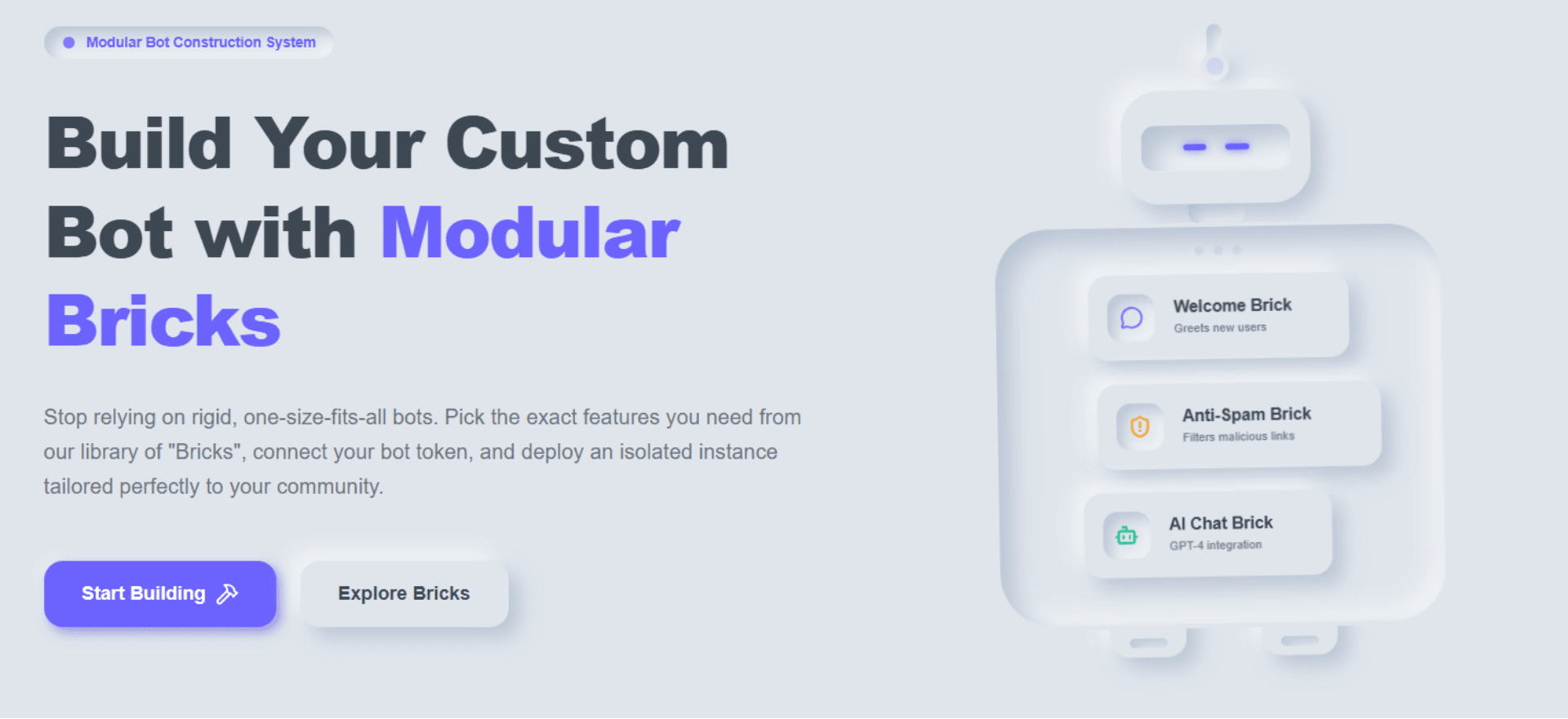
Modular bots, built your way.
Hello again devs! 🤖🐳
Welcome to BricksBots — the project where my confidence got absolutely humbled. 😂
This was another AI-heavy project... but this time we crossed all limits.
We weren't writing prompts anymore.
We were blind prompting. 💀
Life was good... until deployment entered the chat.
We thought we knew deployment. We absolutely did not.
Deploying a Next.js app? Easy.
Deploying a Node backend? Also easy.
Then BricksBots arrived and said, "Hold my Dockerfile."
Suddenly I was hearing words like:
- 🐳 Docker
- 🐧 Linux
- 💻 Virtual Machines
- 🌐 VPS
- 🔑 SSH
- ☸️ Kubernetes
...and I had absolutely no idea what half of them meant.
The architecture was... ambitious. 😭
Our idea was actually pretty cool.
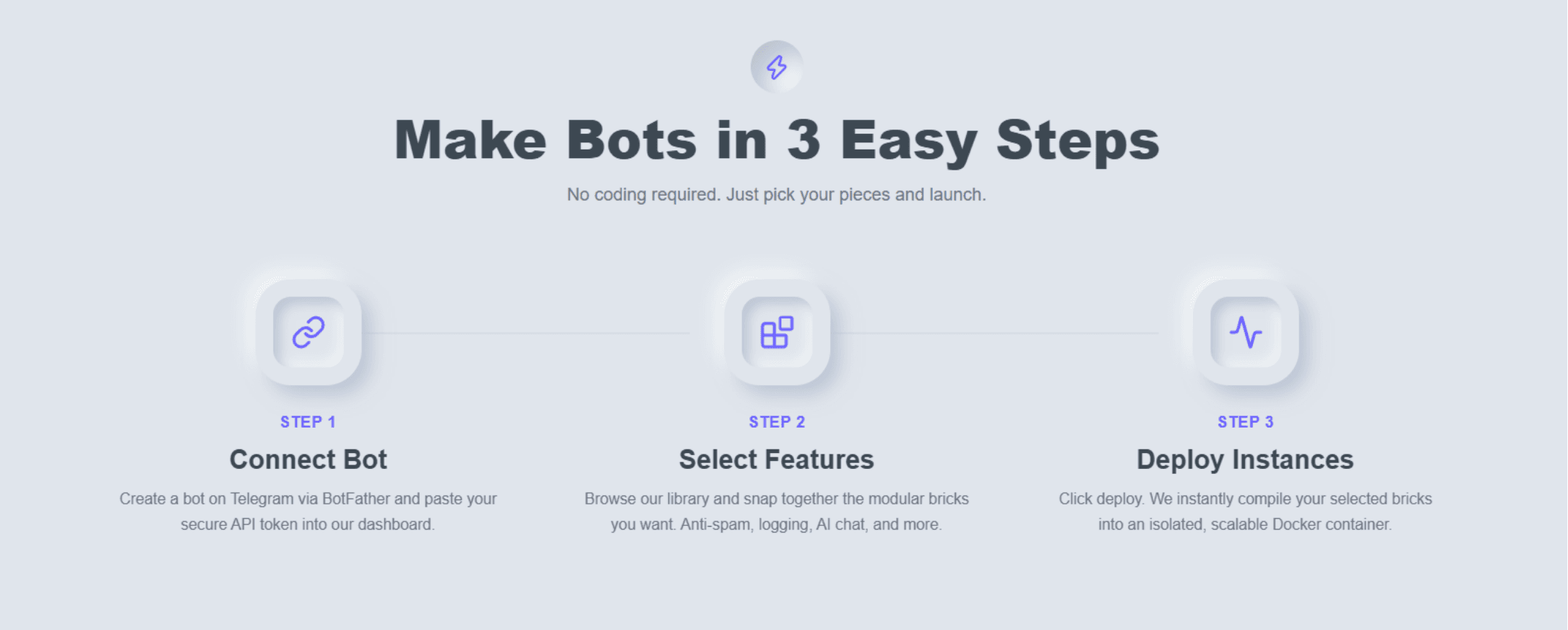
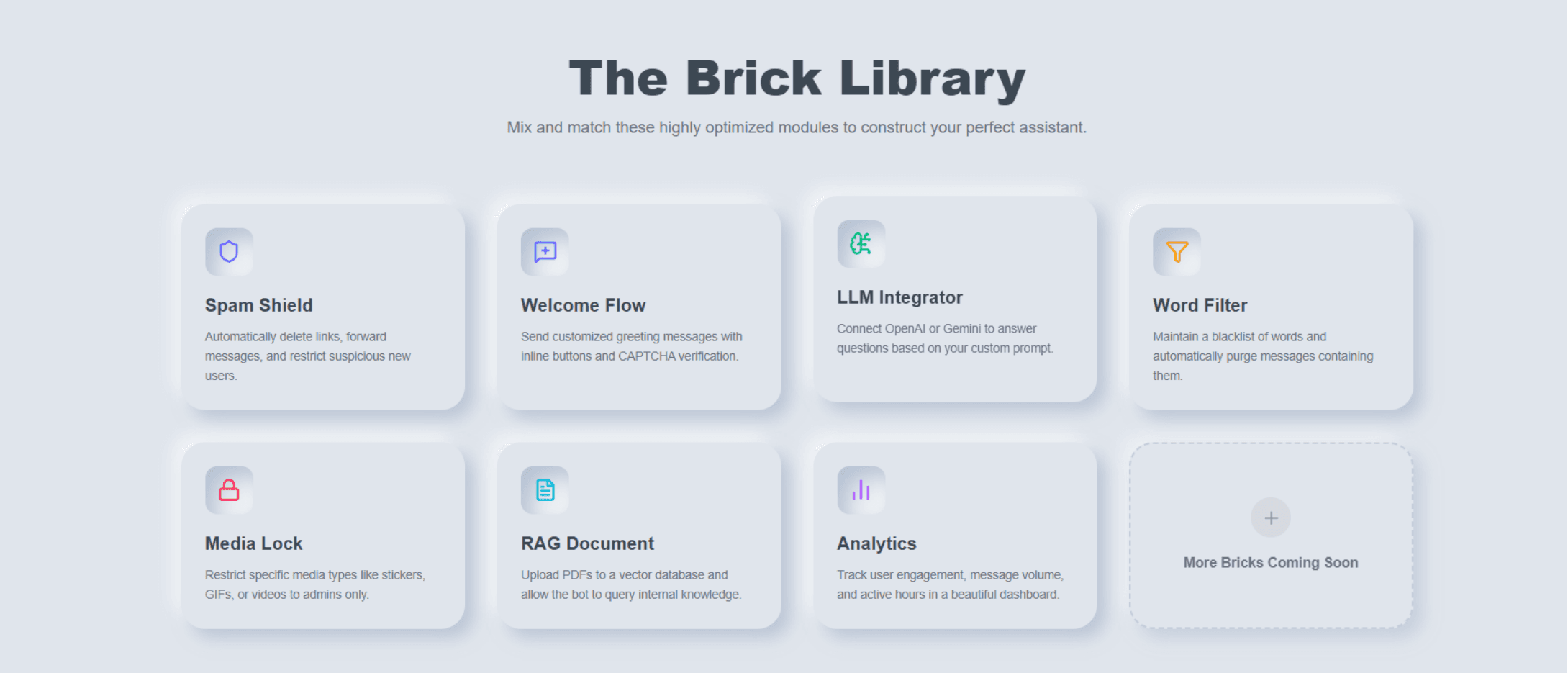
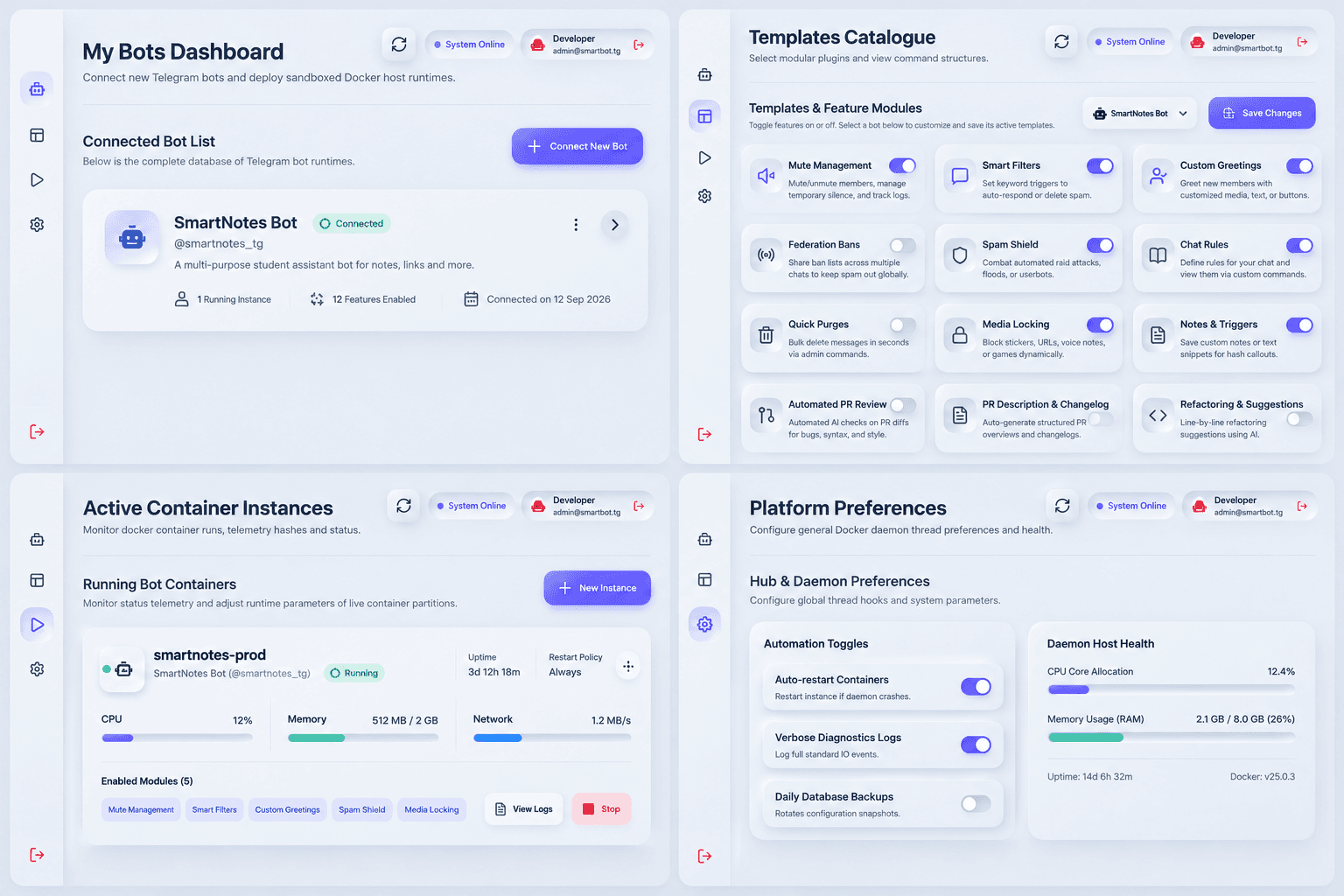
Every Telegram bot connected by a user would get its own Docker container.
Whenever the user changed a feature or enabled a new module, we'd restart that container so the changes became live instantly.
It sounded smart.
Until we tried deploying it.
Only 3–4 days were left before submissions, and we spent most of them fighting Docker instead of building features.
But this project left me with an obsession.
A few weeks later I came back to it — not because I had to... because I was curious.
I started asking:
"What does real deployment actually look like?"
That's when everything clicked.
I went down the rabbit hole of Docker, Linux, VPS, reverse proxies, container networking, scaling, monitoring, and why senior developers keep talking about infrastructure. 😂
The biggest bug wasn't in the code. It was in the architecture.
Then I realized something.
Imagine 10,000 users, each connecting 3 bots.
That's... 30,000 Docker containers. 💀
Our architecture would've been... expensive.
Very expensive.
This project taught me to plan before I code.
I started thinking about architecture, deployment cost, scalability, horizontal vs vertical scaling, and designing systems that are actually practical in production.
What BricksBots really taught me
This wasn't my most successful project.
It was probably my most educational one.
It changed how I think about building software.
Now I spend much more time designing systems first... because fixing architecture later is way harder than writing code in the first place.